
HEIR Annual Conference Archive
The HEIR Network annual conferences are an opportunity for HE institutional research enthusiasts and practitioners to come together as a community to exchange knowledge, information and ideas. The focus is on current challenges and opportunities, to enhance the use of institutional research, data analysis and evaluation, in supporting efficient and effective decision-making, planning and policy formation in HE. The network has organised nineteen successful conferences from 2008-2026.
Please note that job titles and related institutions of colleagues were true at the time of their respective conference participation, but may have changed since.


What was the most beneficial aspect of the conference and why?
'Getting to hear more about what others are doing, sharing ideas, meeting new people, being able to spend time with colleagues new and old outside a work environment, hearing from experts in their field/s, being reminded of why we do what we do, getting inspiration for things to take back to my own institution.'

'Using enhancement, compassion, analytics and data to enable institutional success'
(Abertay University, 2026)
INCOMING
INCOMING
Abertay University hosted a 2-day, in-person conference to explore how analytics, enhancement practices, and compassionate approaches combine to drive real institutional success:
Can institutional research be both rigorous and compassionate? We think so.
We're challenging the sector to move beyond deficit thinking - using data not just to identify problems, but to understand what helps students thrive. How can our metrics capture diverse student experiences? How do we design systems and language to support student development? What does person-centred analytics actually look like in practice?
Whether you're a planner, analyst, academic, student support professional or student, this conference explored how bringing head, heart and data together strengthens both student outcomes and institutional resilience.


The theme for HEIR 2026 was articulated across four key tracks:
1. Transitions and outcomes
How do we support students and staff through critical transition points while measuring what matters? This theme explores the full journey - from student pre-entry through graduation and beyond, and staff onboarding through career development. How do we use data to understand diverse pathways to success? What interventions make a difference at key moments? How can compassionate, evidence-informed approaches improve retention, progression, attainment and outcomes across our whole community?
2. Curriculum and Enhancement
What does an evidence-informed approach to curriculum development and enhancement look like? This theme examines how we use data, student voice, staff expertise, and inclusive practices to design and deliver curricula that support diverse learners. How do we measure curriculum effectiveness beyond traditional metrics? What role does compassion play in assessment design, workload management, and feedback practices? How can institutional research inform innovative pedagogical approaches and staff development that enhance learning and teaching for all?
3. Learning environments
Beyond the physical classroom - how do we create institutional cultures, systems, and spaces that enable success for students and staff? This theme explores both digital and physical learning and working environments, from campus design to virtual platforms, from support services to professional and peer communities. How do we use analytics to understand how our community experiences our institutions? What does it mean to design compassionate systems and structures? How can enhancement approaches transform the environments where learning, teaching, and professional practice happen?
4. Institutional strategy and planning
How can our strategic use of data and analytics improve both institutional effectiveness and student and staff experience? This theme examines how institutional researchers support long-term planning, resource allocation, and sector positioning. How can compassionate approaches to forecasting and modelling account for diverse institutional contexts? What does enhancement-focused strategic planning look like? How do we balance competing priorities while ensuring our institutional strategies enable success for all?
KEYNOTES

Dr Theo Gilbert, University of Hertfordshire and creator of the Compassion in Effective Teams Network
Embedding Cognitive Compassion in the Curriculum: A Practical Workshop
Theo Gilbert, is based at University of Hertfordshire's Centre for Learning, Access and Student Success - and the Business School. He is the creator of the Compassion in Effective Teams network and its website of free, practical resources for motivating and equipping students to reach their individual social and learning potentials in teams/groupwork.
The network consists, so far, of staff from 105 universities across 12 countries to help each other get the science of compassion explicitly onto the curricula, in almost any discipline. As more public and private sector workplaces take up these skills for their teams, Theo welcomes any enquiries about how he can support HE staff wanting to get started with practice and/or research in this fast-emerging area. He was Advance HE's/Times Higher's Most Innovative Teacher of the Year in 2018 and keynote speaker at the Annual National Teaching Fellow/CATE Symposium (2020) as well as presented his work at a number of conferences. He has a strong presence on You Tube in relation to his research and is published in a number of journals and book chapters.

James Dunphy, Chief Executive of the Committee of University Chairs
Graduate Outcomes in Irish higher education: enhancing the evidence base
James Dunphy is the inaugural Chief Executive of the Committee of University Chairs.
He brings a background of building relationships and driving transformation - working with colleagues, stakeholders, and students to develop higher education. James has worked in senior roles within a national funder and regulator, in a sector agency and in an institution.
James was a member of the executive team at the Scottish Funding Council (SFC) during a key time of policy change in higher education - contributing to a national review and holding responsibility for the performance assessment of all institutions funded by SFC. During this time, James worked closely with Ministers on national reform, as well as being responsible for work on key policy agendas such as skills, quality, and tertiary partnership.
As Director of Educational Excellence at Advance HE, James was responsible for delivering Advance HE's educational transformation portfolio, working with senior leaders in the UK, Ireland, Australia and New Zealand. This role included holding responsibility for the Professional Standards Framework, which has recognised 200,000 colleagues globally.
Earlier in his career James was Director of Enhancement of Learning, Teaching and Access at Robert Gordon University (RGU), where he led significant institution-level change. Over 15 years at RGU, James led a multi-institution tertiary partnership, a student-facing service and played a key role in the development of degree apprenticeships.
In 2024, the University of Aberdeen appointed James as a co-opted member of Court’s Governance and Nominations Committee. He is a Principal Fellow of Advance HE and a Fellow of the Royal Society of Arts.


Student Access, Retention and Outcomes: harnessing the evidence (University of East Anglia, 2025)
Graduate Outcomes in Irish Higher Education: enhancing the evidence base
Valeria Harvey, HEA (Keynote Speaker)
Continuation: exploring why HE students persist through their studies
Gemma Standen, UEA (Research Presentation - Supporting Retention)
Strategic Responses to Student Retention in a Developing Country Higher Education Context
Dr. Nandarani Maistry & Dr. Vikash Jugoo, University of Johannesburg (Reserach Presentation - Supporting Retention)
Using AI to unlock actionable insights from student free-text feedback
Joe Mahon, EVASYS (Research Presentation - Supporting Retention)
From sidelines to headlines: Sport & Physical Activity's Role in Student and Institutional Success
Julia Robathan and Mark Heazle, UEA (Research Presentation Supporting Retention)
Home Virtuality and Suspension (xuan fu): the Sense of Home among Chinese International Students in the West
Zhongzhi He, Macau Millenium College (Research Presentation - Improving Outcomes)
Embedding Relational Pedagogy in Higher Education
Lauren Flannery and Dr Elizabeth Scholefield, UEA (Research Presentation - Improving Outcomes)
Out of our hands? Towards Collaborative Accountability in Elite Admissions
Dr Kate Ayres, Durham University Business School (Research Presentation - Widening Access)
Championing boys: Supporting boys to find their voice & increase engagement in school
F.Plom, University of Kent (Research Presentation - Widening Access)
Student International Travel related to Higher Education: Carbon costs and potential solutions
Howard-Jones, P.A, Davis, C., Lopez Castellanos, F., McCarthy, L., Parker, M., Ralph, T. Tilling, L, Wade, K., Wenham, L. and Williams, J. (Research Presentation - Widening Access)
HEIR Network Annual Conference 2025 Pre-arrival Surveys
Joe Mahon, EVASYS (Research Presentation - Supporting Retention)
Beyond awarding gaps: developing a value-added metric to understand graduate outcomes in UK Higher Education
Matt Hiely-Rayner, University of Sussex, Mohammed Yakub and Benedict Watling, Buckinghamshire New University(Research Presentation - Informing Policy)
Exploring Educational Gain as a Metric to Tackle Attainment Gaps and Promote Inclusion in Higher Education in England
Fabio Aricò, Ritchie Woodard, and Laura Harvey, UEA (Research Presentation - Informing Policy)
The Heart of Teaching: Reflective Practice in Teaching and Learning
UEA (Future Learn online training course)
Make it Count
Julie Smith and Steph Copsey, UEA in partnership with Structural Learning (Lightning Talk)
Progression Partnership
Evan Hancock, UEA in partnership with Career Central (Lightning Talk)
Empowering Postgraduate Students Who Teach: The Impact of a Bespoke Programme of Support
Janet Horrocks, Abertay University (Lightning Talk)
Creating a new university student success strategy: Using Jisc Beyond Blended Resources
Julie Blackwell Young, Abertay University (Lightning Talk)
Widening Participation Through Partnership: The University of Kent's Role in Sponsoring a Multi-Academy Trust
Dr. Marta Almeida Hill, University of Kent (Lightning Talk)
Research Culture Insights from IREACCH: Differing Perceptions and Expectations at the University of Leicester
Chun Hao Wang and Genovefa Kefalidou, University of Leicester (Lightning Talk)
From Pedagogy to Impact: differential outcomes across students who attend a first-year transition program
Dr. Sierra Smucker and Rachel Bowden, University of Brighton, Jo MacDonnell, Kingston University and (Lightning Talk)
Inclusive Admissions, Recruitment, and Marketing: the importance of a co-ordinated approach
Scott Knight, UEA (Lightning Talk)
Data-led interventions to improve BAME representation
Kirsty Webb, UEA (Lightning Talk)
Data-Driven Insights and Cross-Comparisons into Student Perceptions of Reflective Practice
Alison Cullinane, Sarah Gretton, Ruth Deighton, Niccolo Tiango and Nigel Page, The University of Edinburgh, Kingston University London, University of Leicester (Lightning Talk)
Advancing EDI at University: Reflexive Practices in UK-Japan Higher Education Contexts
Tomoko Torii, Waseda University, Japan and Elena Zaitseva, Liverpool John Moores University, UK (Lightning Talk)
The University of East Anglia (UEA) were proud to host the UK & Ireland Higher Education Institutional Research (HEIR) Network 2025 Annual Conference on the 4th and 5th of September.
The theme for HEIR 2025 was articulated across four key tracks:
-
Widening Access: exploring effective ways to boost participation of underrepresented groups and widen equality, diversity and inclusion in HE.
-
Supporting Retention: investigating what provision and interventions allow HEIs to support all students throughout the student lifecycle.
-
Improving Outcomes: tackling the link between learning and attainment, student experience and employability, within and beyond national policy frameworks.
-
Informing Policy: harnessing research and evaluation and promoting collaborations to bridge institutional practice and HE policy.

KEYNOTES

Bart Rienties Professor in Learning Analytics at the Institute of Educational Technology, Open University, UK
The role of Artificial Intelligence and Digital Assistance in Student Inclusion, Retention and Outcomes
Bart Rienties is Professor of Learning Analytics and programme lead of the learning analytics and learning design research programme at the Institute of Educational Technology at the Open University UK. He leads a group of academics who provide university-wide learning analytics and learning design solutions and conduct evidence-based research of how students and professionals learn. As educational psychologist, he conducts multi-disciplinary research on work-based and collaborative learning environments and focuses on the role of social interaction in learning, which is published in leading academic journals and books. His primary research interests are focussed on Learning Analytics, Learning Design, and the role of motivation in learning.

Valerie Harvey Head of Performance Evaluation, Higher Education Authority, Ireland
Graduate Outcomes in Irish higher education: enhancing the evidence base
Valerie Harvey is Head of Performance Evaluation with the Higher Education Authority (HEA), and is responsible for the development of institutional and system performance data reporting for the Irish higher education system. Valerie oversees two national surveys in Irish higher education, as managed by the HEA: StudentSurvey.ie, the national survey of student engagement and the Graduate Outcomes Survey. Over the last 10 years, Valerie has expanded the national evidence base for higher education by developing data linking infrastructure between the HEA and other data holders within higher education. Valerie’s academic background is in mathematics, statistics, computing and public policy.
EXPERT PANEL


Sunday Blake – Education and Parliamentary Engagement Policy Manager at GuildHE, England
Rhona McCormack – Director of Student Affairs, University of Limerick, Ireland
Ann Cotterill – Membership Network Lead and Quality Manager, Quality Assurance Agency


Into, Through and Beyond: Equitable Student Progression
(Buckinghamshire New University, 2024)
Buckinghamshire New University (BNU) were proud to host the UK & Ireland Higher Education Institutional Research (HEIR) Network 2024 Annual Conference on 12-13th September.
Themes for HEIR 2024
-
Transition into higher education
-
Inclusive student experiences and curriculum
-
Educational gains
-
Progression into employment or further study
This theme was equitable student progression and encompassed multiple strands of IR activity. Progression is usually taken to mean student progression on their course of study: engaging, being retained, making academic progress and gaining a good award. BNU's sub-themes of inclusive student experiences, inclusive / decolonised curriculum and learning gain address these aspects of the student journey. With a broader interpretation of ‘progression’, they also curated material that spoke to the ‘into’ and ‘beyond’ stages of the journey: transition into HE and progression into careers and further study.


Addressing Equity in Higher Education Through Institutional Research
(Kingston University, 2023)
Final Year Research Projects and Impact on Graduate Attributes Development
Vanessa Armstrong and Maria Kyriazi, Newcastle University
Addressing equity in the assessment of practice research: lessons from the arts
Dr. Bill Balaskas and Dr. Katia Chornik, Kingston University London
Developing an inclusive curriculum, a module to Faculty journey
Josephine Van-Ess, University of Sussex Business School
Promoting equity in education for sustainable development through community-based learning and teaching
Dr. Rehan Shar, Queen Mary University of London, Dr. Anne Preston, IoE & UCL East, and Ms. Elena Dimova, UCL
Student Parents: Challenges facing a 'forgotten' student group
T Abu Rosales, S Sharif, K Zuchowski Morrison, K Whiting, G Shearman, Kingston University London
Coping with data discontinuity: how the Guardian University Guide is making use of results from the National Student Survey
Matt Hiely-Rayner, University of Sussex
Designing re-assessment policies to prioritise student reflection: changes to doctoral modules that you might want to consider
Mark Carver, University of St Andrews
Influence of Diverse 3D Anatomy Models on Students' Belonging and Satisfaction in Health Sciences
Dr. Lizzy Landen and Dr. Natasha Barrett, University of Reading
Inclusive Newcastle Peer Networks for Engineers: A mixed-methods and participatory bottom-up design to enable students as partners and co-creators in their education
Eleni Hadjigeorgiou, Charlotte Boulton, Mark Geoghegan, Alison Shaw, Sharron Kuznesof, Newcastle University
Kingston Upon-Thames University were proud to host the UK & Ireland Higher Education Institutional Research (HEIR) Network 2023 Annual Conference on the 7th-8th September.
Theme for HEIR 2023
The theme was ‘Addressing Equity in Higher Education Through Institutional Research’ highlighting the many ways in which institutional research, evaluation and data analysis increasingly play a pivotal role in supporting, evidencing, and strengthening equality for all in the HE environment.

KEYNOTES

Ian Dunn, as Provost for Coventry University Group
Ian is Chief Academic Officer and takes responsibility for driving the highest standards of academic excellence and supporting the leadership of the Education, Research and Enterprise & Knowledge Transfer activities across the University Group.
Ian is proud to be described as a disruptor in UK Higher Education and led the development of Coventry University College in 2011. This lower cost, flexible model of higher education was specifically designed to support wide access to higher education. More recently in 2017 he led the creation of Coventry University Online and the partnership with FutureLearn. Developing a substantial team that was able to develop great online learning degree courses as well as micro-credentials turned out to be very useful as education moved into remote teaching in 2020. The next challenge is how online and on-campus blend to suit the individual circumstances. Ian works extensively with EdTech organisations and has chaired the publication of a number of green papers exploring ideas for the next few years.
Data and Instinct: Wider access and reduced awarding gaps
The key theme throughout this presentation will be the role of institutional data to make the case for wider access and enhancing the outcomes for all. Institutional data can be a phrase to strike fear into the heart of many academics, but when you explain that you are looking for patterns to emerge for the information, it becomes less scary. The patterns that are being sought here are those which reveal how to unlock greater equity in our institutions, that provide mechanisms to address the shortcomings in equity of the compulsory phases of education and that can provide us with the keys to a properly personalised education in a world of mass HE. Unlocking data to unlock insight means that we can make real headway towards better outcomes for many students.

Dr Camille Kandiko Howson, Associate Professor of Education in the Centre for Higher Education Research and Scholarship (CHERS) at Imperial College London
She is an international expert in higher education research with a focus on student engagement; student outcomes and learning gain; equality and social justice; and quality, performance and accountability.
She works to support high quality and high impact pedagogical research and collaborate with colleagues to conduct disciplinary-based educational research. Camille’s current research focuses on international and comparative higher education; the curriculum; using learning analytics to support the student experience; academic motivation, prestige and gender; student engagement, identity and belonging; and intersectionality in research design.
Educational gain: Going beyond the degree
We know there is more to higher education than a piece of paper and a walk across a stage. However, in data-led regulatory world students can be viewed as in-puts, through-puts and out-puts. In England B3 regulatory conditions further condense students into pass rates for continuation, degree outcomes and employment. The diversity of students across the sector becomes split metrics. While not disputing the importance of getting students in and through, we also need to consider the quality of the experience that students have, what they have gained from their time and efforts in higher education. We know it is more than a degree, but how do we go about capturing it? And how do we account for different benefits different groups of students may have? We know there is no single silver bullet metric to measure the outcomes of higher education and that learning goes beyond disciplinary knowledge, also including wider skills and affective measures, and that robustly measuring learning gain requires multiple indicators. We are well-versed in awarding gaps, but how do we identify and intervene what is leading to those gaps, addressing equity rather than outcomes? This talk draws on a decade of research on learning gain in higher education, the policy context for accounting for outcomes of higher education and new on-going QAA-funded research on how institutions are articulating their unique approaches to capturing the educational gain of their students. This talk explores how measures of educational gain can challenge the status quo in higher education, including the relationship with assessment and feedback; quality assurance; and opportunities for capturing the diversity of experiences that diverse students have. We will conclude with a conversation on balancing standardised metrics and those tailored to specific contexts—and what this means for institutional researchers, policy makers and students.

Patrick Johnson, Director of Equality, Diversity and Inclusion, The University of Law
Patrick became Director of Equality, Diversity and Inclusion (EDI) at the University of Law in January 2021 after working for 20 years at the University of Manchester. He is a member of the University Executive Board and has specific responsibility for EDI, Wellbeing, Student Support Services and Widening Participation.
He has worked in EDI for the last 15 years and has been an active member of the HE community, collaborating with a wide range of institutions and supporting sector wide groups. He was a
-
Board member at the Equality Challenge Unit (now part of Advance HE) for six years
-
an advisor and member of the Diversity Steering group at the Wellcome Trust
-
member of the Minister of State for Universities Diversity in Research and Innovation Committee
Patrick is currently a member of the Advance HE Race Equality Charter Governance Committee and was a Commissioner with the Disabled Students’ Commission, an independent and strategic group that advised, informed and influenced higher education providers to improve support for disabled students.
A Commitment to disabled students
The presentation will explore some of the current sector challenges and will specifically look at what disabled students say they want from their higher education experience. The Disabled Student Commitment is a response to what disabled students say they want and it provides the opportunity to transform the disabled student experience. The presentation will examine the detail of this Commitment.
Dr Katie Bell, Chief Marketing Officer at UCAS
Katie is responsible for delivering world class information, advice and guidance (IAG) to students, their advisors, and to present Higher Education in an accessible way. She is also UCAS’ lead on raising the profile of higher and degree apprenticeships by providing tools, information and support that will help students make the higher education choice that is right for them, and which will help learning providers and employers access students as employees who are right for them.


Institutional Research in a Changing Higher Education World
(HEIR Planning Group Collaboration, 2022)
Recommendations from the ground: Student led use of social media to foster inclusive groupwork
Sue Beckingham, Sheffield Hallam University (Poster)
Student Survey Insight Reporting: Evolving staff engagement with survey results and interaction with data
Joanna Carter, University of Hull (Poster)
Exploring Academic Staff Perceptions of Disclosing Mental Ill Health and Perceived Barriers to Seeking Support from Line Management: A Mixed Methodology Approach
Ellie Brown and Dr. Rosalyn Collings, University of Wolverhampton (Poster)
Exploring UK mature students experience of returning to campus teaching following COVID lockdowns: a thematic analysis
Karen Cooper and Dr. Rosalyn Collings, University of Wolverhampton (Poster)
The Gay Agenda: Fair representations and inclusion of LGBTQ+ people in the medical curriculum
Dr. Eleanor M. Townsend, University of Exeter Medical School (Poster)
Shifting Student Engagement: The Impact of Commuting and Covid-19 on Assessment Gaps at a London University
Nigel Page, Kingston University London (Poster)
Learning at distance and return to campus - The impact of Covid-19 on student engagegement at University College Dublin
Maura McGinn and Lisa Bennett, University College Dublin (Presentation)
Tackling inequalities in higher education: an overview of TASO's work one year on
Omar Khan, TASO (Presentation)
Understanding prior learning experiences and concerns on entry to 're-image' the student experience for success
Dr. Michelle Morgan, Creator of the Student Experience Transitions Model (Presentation)
Measuring the quality of university education: beyond the nonsense of university rankings
Paul Ashwin, Lancaster University (Presentation)
Shifting Patters of Governance
Peter Scott, UCL, IOE (Presentation)
Learner Dashboards can they support student agency and empowerment?
Dr Liz Bennett, University of Huddersfield (Presentation)
Student Futures Manifestos – What role for IRs?
Mary Curnock Cook (Presentation)
The HEIR Planning Group were proud to jointly host the UK & Ireland Higher Education Institutional Research (HEIR) Network 2022 Annual Conference online on the 8th-9th September.
KEYNOTES
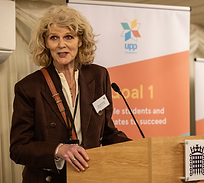
Mary Curnock Cook CBE @MaryCurnockCook
Mary Curnock Cook is an independent education expert serving in a non-executive capacity on a number of Boards.
From 2010-2017, Mary was Chief Executive of UCAS. Earlier in her career she held executive and non-executive positions in the education, hospitality, food
and biotech sectors.
Mary is chair of Pearson Education, its UK arm, and also chairs the governing body of the Dyson Institute. She Is a non-exec Director at the Student Loans Company, the London Interdisciplinary School, the Student Room and Education Cubed, and a Trustee at the Higher Education Policy Institute (HEPI). She has the role of Network Chair for Emerge Education, the leading edtech investor in Europe.
In 2021, Mary took on the Chair of the UPP Foundation Student Futures Commission, set up to ensure successful student futures following the pandemic. She is a regular speaker and commentator on HE policy and practice and a recognised champion of the student interest.
Mary has an MSc from London Business School and was awarded an OBE in 2000, and a CBE in 2020 for services to further and higher education. She is an honorary Fellow of Birkbeck and Goldsmiths and has an honorary doctorate from the University of Gloucestershire.

Professor Sir Peter Scott
Peter Scott is emeritus Professor of Higher Education Studies at University College London, Institute of Education. He was Scotland’s first Commissioner for Fair Access from 2017 to 2022.
He was Vice-Chancellor of Kingston University from 1998 until 2010, and previously Pro-Vice-Chancellor and Professor of Education at the University of Leeds. His earlier career was spent in journalism and he was Editor of ‘The Times Higher Education’. He was also a member of the board of the Higher Education Funding Council for England (HEFCE)
where he chaired its widening participation strategic committee.
He was knighted in 2007 for services to education and has published widely on education and widening access issues.
His latest book is ‘Retreat or Resolution: Tackling the Crisis of Mass Higher Education’.
Shifting Patterns of Governance
Prof. Peter Scott, UCL, IOE
Measuring the quality of university education: beyond the nonsense of university rankings
Paul Ashwin, University of Lancaster
Experiences of Students Using their Personal Data for their Wellbeing
Prof. Alan F. Smeaton, Dublin City University
Poster Sessions with Lightning Talks
Changes in the 2023 Guardian University Guide
Matt Hiely-Rayner, Director of Intelligence Metrix
Student Futures Manifestos What role for IR's?
Mary Curnock Cook, CBE
Tackling inequalities in higher education: an overview of TASO's work so far
Dr. Omar Khan, TASO
Understanding prior learning experiences and concerns on entry to 're-image' the student experience for success
Dr. Michelle Morgan, Creator of the Student Experience Transition Model
Learner Dashboards: can they support student agency and empowerment?
Dr. Liz Bennett, University of Huddersfield
Mental Health Analytics: Using data to better support student wellbeing
Dr. James Newham, Northumbria University, and Prof. Peter Francis, Birmingham City University

Inclusive Institutional Research
(University of St Andrews, 2021)
University of St Andrews were proud to host the UK & Ireland Higher Education Institutional Research (HEIR) Network 2021 Annual Conference on the 22nd-24th September.
THEMES
-
Building an inclusive student experience
Widening access, inclusive curricula, decolonising the curriculum, alternative degree structures, delivering education to different communities, different modes of delivery, technology and technology enhanced learning, identified progress trends within HE with respect to protected characteristics.
-
Evidencing inclusive policies and practices
Ethics of equality and diversity data, engagement by different student groups, transparency with respect to issues, metrics and data, higher education charter marks and benchmarking including but not limited to Athena SWAN, Athena SWAN Ireland, the Race Equality Charter Mark, International Charters and Stonewall, data collected and used by institutions such as module evaluation responses and other student feedback, addressing bias in such data.
-
Developing an inclusive institutional culture
Supporting staff wellbeing, flexible work practices, transparency and trust in policies and procedures, institutional research cultures, valuing different roles in institutional research, inclusive practices for staff, leadership training, research into the wider role of institutional culture, interdisciplinarity, representation in decision-making, sustainability, third space, community relations.
-
Supporting best practice in learning, teaching, analytics and student experience
Best practices in learning, teaching, data analytics, enhancing student experience and developing academic / transferable skills.


KEYNOTES

Dr Zainab Khan, London Metropolitan University
Zainab is currently a Pro Vice Chancellor for teaching and learning at London Metropolitan University and Director of the University’s Centre for Equity and Inclusion. Alongside staff development, she has institutional responsibility for the teaching and learning strategies, the Access and Participation Plan and driving improvement in key student outcomes as well as development of the academic portfolio.
Zainab has held a number of strategic and operational management roles, prior to joining London Metropolitan in September 2019 Zainab was a Faculty Director at the University of the West of England, supporting three large departments to achieve outstanding academic and teaching excellence framework (TEF) results.
Led by Zainab, London Metropolitan’s Centre for Equity and Inclusion, is pioneering a new approach to embedding equality, diversity and inclusion (EDI) into institutional practices, specifically institutional approaches to creating an inclusive and equitable culture for staff and students. Since arriving at London Met she has led the development and introduction of a values-led vision of Teaching & Learning strategy which places inclusion, accessibility and social justice at the heart of teaching practice and the curriculum. Zainab is a multi-award-winning advocate for inclusion and race equity in education. Her work has received national recognition at the prestigious Guardian University Awards in 2019, Inclusive Companies Awards 2018 and she was highly commended at the Asian Women of Achievement Awards 2020. Her particular area of expertise is the design and implementation of transformational change programmes which address the experience of Black and minoritised individuals in Higher Education and the labour market. Prior to her academic career Zainab trained as a barrister and holds a PhD in law. Her doctorate examines the exclusionary dimensions to public participation in environmental decision-making, exploring the experiences of marginalised groups, the relationship between State and citizen as well as impact of the Anthropocene on non-human interests. Zainab is a Trustee of the Lord Mayor’s Appeal, member of the governing body for University College Birmingham and a committee member of the Law Society’s Ethnic Minority Lawyers’ Division

Prof Lee Elliot Major, University of Exeter
Lee Elliot Major is the country’s first Professor of Social Mobility. Appointed by the University of Exeter to be a global leader in the field, his work is dedicated to improving the prospects of disadvantaged young people. As a Professor of Practice he focuses on research that has direct impact on policy and practice, working closely with schools, universities, employers and policy makers.

Honorary Associate Professor Dr Celia Whitchurch, Centre for Global Higher Education, University College London Institute of Education
Dr Celia Whitchurch is Honorary Associate Professor of higher education at University College London Institute of Education. Her research interests focus on academic and professional identities in higher education and changing workforce patterns.
Completed projects include an international study for the Leadership Foundation for Higher Education (LFHE) on Professional Managers in UK Higher Education: Preparing for Complex Futures (2008); an LFHE-funded study on Staffing Models and Institutional Flexibility (2013); and a study for the UK Higher Education Academy on Shifting Landscapes: Meeting the staff development needs of the changing academic workforce (2016).
She has recently been Principal Investigator on a Centre for Global Higher Education (CGHE) project entitled The implications of a diversifying workforce for higher education systems, institutions and individuals and is completing a monograph from that project. She has also published an edited monograph (with George Gordon) on Academic and Professional Identities in Higher Education: The Challenges of a Diversifying Workforce (2010); a single-authored monograph, Reconstructing Identities in Higher Education: The Rise of Third Space Professionals (2013); and a further monograph with George Gordon on Reconstructing Relationships in Higher Education: Challenging Agendas (2017). She edited Higher Education Quarterly between 2007 and 2017.

Dr. Gregory M. Walton, Stanford University
One of the most pressing societal problems is the persistent inequality in academic achievement between different social groups. While many structural factors contribute to this inequality, Gregory Walton has long been interested in the role of psychological processes, such as those stemming from negative intellectual stereotypes, and how theory-based interventions that address these can reduce inequality in education. Gregory Walton’s social-belonging intervention aim to prevent corrosive attributions by providing a non-threatening narrative for feelings of nonbelonging in school.
Institutional Research: Strengthening Higher Education Futures
(University of Brighton, 2020)
University of Brighton were proud to host the UK & Ireland Higher Education Institutional Research (HEIR) Network 2020 Annual Conference online on 10th-11th September.
THEMES
-
Enhancing learning lives
Using institutional research to drive improvements in student engagement and learning experiences.
-
Enriching Data stories
Transforming institutional research and data into insights and narratives to drive action.
-
Influencing policy
Applying institutional research to inform and influence policy and strategy formation.
-
Learning from Crises
How institutions have responded and evolved in response to the recent COVID-19 crisis.

KEYNOTES

Nona McDuff, Pro Vice Chancellor, Students and Teaching at Solent University
She was awarded an OBE for her services to diversity in higher education and is a Principal Fellow of the Higher Education Academy. She has served as a panel member of the Teaching Excellence and Student Outcomes Framework (TEF) as the widening participation expert and was part of the ministerial Social Mobility Advisory Group convened to widen access and improve success for disadvantaged and under -represented groups.
As chair of the Higher Education Race Action Group (HERAG) with over 400 members, Nona was invited to address the All Party Parliamentary Group on Higher Education on diversity in academia where she challenged the ministers to take active steps to promote social justice through education.
Nona’s research interests include inclusive curricula and differential attainment.

Eliza Kozman Deputy Director (Research) at the Centre for Transforming Access and Student Outcomes (TASO)
The Centre for TASO is an affiliate What Works centre set up to tackle inequality in higher education. Formerly, she worked for the Behavioural Insights Team where she designed and implemented a range of research projects with a focus on reducing inequality in education.
Eliza is undertaking a PhD at University College London where her work focuses on how role models can help tackle identity-based barriers to education.
Eliza has a strong interest in social mobility and a background in higher education policy.

Professor Sir Chris Husbands
Chris is a university leader, academic, educationist and public servant. He has served as Vice-Chancellor of Sheffield Hallam University since January 2016.
Prior to joining Sheffield Hallam, Chris was Director of the Institute of Education (2007-2015) and then Vice-Provost at University College London (2014-2015). Sir Chris is also Chair of the Teaching Excellence and Student Outcomes Framework (TEF) and Chair of the Higher Education Statistics Agency (HESA) Board, Yorkshire Universities Board, and the Doncaster Opportunity Area Partnership Board. In addition, he was appointed to the board of UUK in August 2019.

David Kernohan, Associate Editor of Wonkhe
Until June 2016, he worked at Jisc as a programme manager and senior codesign manager, after being seconded from HEFCE in 2006. He has also worked for the University of Glamorgan (now the University of South Wales). As Associate Editor, David has responsibility for the development and delivery of a variety of editorial content. His key areas of wonkishness include teaching quality enhancement policy, funding policy, sector agency politics and history, research policy, and the use of technology and data in Higher Education. David has written for Wonkhe since foundation, and also maintains a personal blog.

Measuring Excellence in Higher Education: Approaches and their Impact
(University of Wolverhampton, 2019)
The Changing Landscape of Higher Education - Challenges and Opportunities for Institutional Research
(Royal College of Surgeons in Ireland, 2018)

Metrics that matter: future directions for qualitative and quantitative institutional research
(Liverpool John Moores University, 2016)
The Stories We Tell: Using institutional research to enhance policy, practice and engagement
(University of West Scotland, 2015)
Breaking the Mould: Creating an evidence based enhancement culture
(Robert Gordon University, 2017)

How we translate research findings into actions that give rise to change
(Oxford Brookes University, 2014)
Productive Partnerships: Engaging stakeholders in IR
(Birmingham City University, 2013)

Unlocking Institutional Research: information and knowledge for enhanced institutional effectiveness
(University of Liverpool, 2012)
Scanning the horizons: Institutional Research in a borderless world
(Kingston University, 2011)
Institutional Research: Informing Institutional Enhancement, Practice and Strategy
(Dublin City University, 2010)

Building a Community for Institutional Research in the UK and Ireland
(Sheffield Hallam University, 2009)
Exploring the Hinterlands: Mapping an Agenda for Institutional Research in the UK
(Southampton Solent University, 2008)